
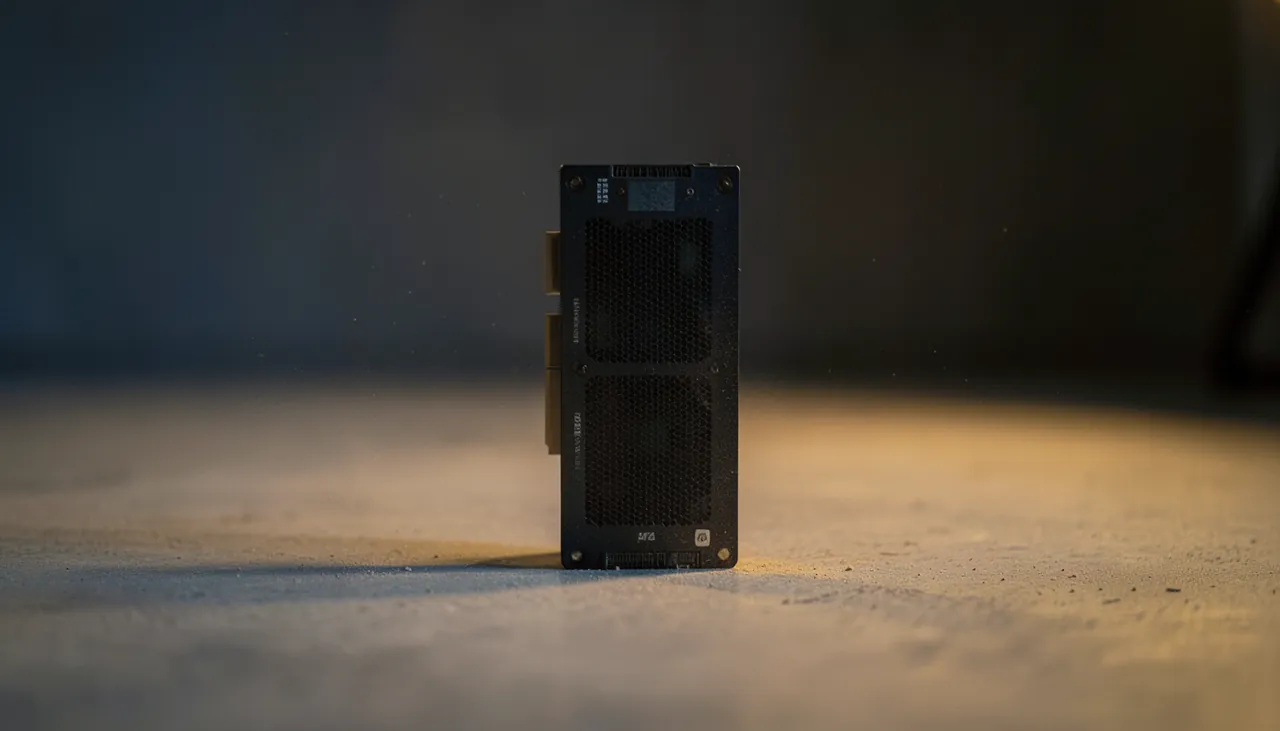
Arbol on November 19 launched GPU Residual Value Protection, a parametric cover that pays cash at the end of its term when a benchmark GPU rental index sits below a strike the buyer selects. The New York underwriter is offering it to owners of AI chips and to the lessors, lenders and residual value guarantors behind them.
The payout follows a formula fixed at inception, Arbol said in its release. "There is no sale, appraisal, condition test, or loss adjustment, and the owner keeps the hardware," the company said. It is the second product this fall from Arbol's AI and Digital Infrastructure practice, after an October cover that Artemis described as protection against governments halting data center construction as a class. The release gave no reference index, capacity or pricing.
The launch comes as GPU owners borrow against the chips themselves. CoreWeave carried $47.0 billion of technology equipment at September 30, up from $20.9 billion at the end of 2025, according to its third-quarter 10-Q.
Key Takeaways
- Arbol lets the buyer set strikes, tenor and limit against its own loan, lease or depreciation schedule, and said many of those schedules run five years or longer.
- Ornn Data's H100 rental index, one published benchmark, settled at $2.78 per GPU-hour on November 19, down 13.9% in a month.
- Payment comes only at expiry. CoreWeave's August facility repays monthly from February 2027 to July 2031, so a lender's exposure can crystallize before the cover settles.
- Ornn's index for the newer B200 chip rose 0.1% in the same month, to $9.17, so a strike on one chip generation leaves the buyer's own fleet as basis risk.
- Index-settled cover is a derivative marked to market under US GAAP, where sale-settled cover can be insurance, the Capital Relief newsletter said, citing PwC guidance.
- The largest disclosed per-risk limit in sale-settled GPU residual value insurance is $25 million, according to the Capital Relief newsletter, against a $2.6 billion CoreWeave facility signed in August.
What the cover pays on and the balance sheets behind it
Arbol said each structure is built around the client's own exposure. Owners, which it listed as hyperscalers, neoclouds, AI labs, enterprises and infrastructure funds, can use the cover to protect book value against faster depreciation. Lessors can protect the residuals they book, lenders and asset-backed investors can put a floor under GPU collateral, and guarantors can hedge the guarantees they write.
"What a GPU will be worth in three or four years is the question every owner, lessor, lender, and guarantor in this market is trying to answer," said Sid Jha, Arbol's founder and chief executive. "We pay on an index instead of a resale price or an appraisal, so anyone holding GPU risk has a number it can underwrite, book, or hedge against from the day the deal closes."
CoreWeave's filings show the scale. Technology equipment was 73% of its $64.6 billion of gross property and equipment at September 30, and depreciation and amortization on property and equipment reached $1.9 billion in the quarter, against $621 million a year earlier. The company depreciates that equipment on a straight-line basis over six years, according to its 2025 10-K, having changed the estimate "from five to six years" effective January 1, 2023. On that schedule half the cost is still on the books after three years, before any salvage value.
Hyperscalers have moved the same way. Meta raised the useful lives of most servers and network assets to 5.5 years from January 1, 2025, which cut that year's depreciation expense by $2.92 billion, its 10-K says.
The chips are also collateral. CoreWeave's 10-Q says the debt of its bankruptcy-remote financing subsidiaries was secured by $22.2 billion of non-current assets at September 30, primarily property and equipment. The $2.6 billion delayed draw facility it signed in August, at Term SOFR plus 5.50%, is sized on "the depreciable cost of graphics processing unit servers" and repays in monthly installments from February 2027 to July 2031. A March facility of $8.5 billion at SOFR plus 2.25% matures in March 2032.
Pricing a put on a rental index
In economic terms the product is a cash-settled put on a rental index, observed once at expiry. Conventional residual value insurance indemnifies the gap between an insured floor and what the hardware fetches. Under American Compute's GPU programme, an eligible sale, appraisal or valuation index must first establish the asset's value, the sale window is 90 days from the trigger date and the equipment must carry OEM warranty, Chris Hodgeman of Belstan Capital wrote in his Capital Relief newsletter.
Index-settled and sale-settled GPU residual value cover
| Term | Arbol GPU Residual Value Protection | Sale-settled residual value insurance |
|---|---|---|
| Trigger | Benchmark GPU rental index below the buyer's strike | Eligible sale, appraisal or valuation below a floor set as a share of equipment cost |
| When it pays | End of the term | After a sale within 90 days of a trigger date |
| Hardware | Owner keeps it, with no condition test | Must carry OEM warranty through the policy term |
| US GAAP treatment | Derivative, marked to market | Can be accounted for as insurance |
Sources: Arbol release, November 19, 2026; Capital Relief, November 20, 2026, describing American Compute's programme and PwC guidance.
Nothing in the loss record helps with the price. "As far as I can tell, no GPU residual value claim has been paid yet, so there's no claims history to price from," Hodgeman wrote. That leaves the level and volatility of the index itself.
Arbol has not said which index it uses, but published ones show the size of the moves. Ornn Data's Compute Price Index, built from executed compute trades, settled the H100 at $2.78 per GPU-hour on November 19, down 13.9% over one month and 5.1% on the day. Its B200 index was at $9.17, up 0.1% on the month.
The gap between those two chips is the buyer's basis risk in miniature: a put struck on one generation's rental rate settles on that rate, whatever the buyer's own fleet, age mix and contracts are worth. Ornn's methodology says its indices measure on-demand rentals only and exclude reserved and long-term contracts. CoreWeave's committed contracts are take-or-pay, with initial periods that "generally" range from one to six years, its 10-K says.
The link from an hourly rate to resale value is also loose. Published estimates of a three-year-old H100's value run from about 20% to 69% of cost, according to Hodgeman.
Two further differences fall on lenders and on reported earnings. Arbol's cover "pays only at the end of the term, so it doesn't help a lender facing an earlier default," Hodgeman wrote. CoreWeave's August facility amortizes monthly and must be prepaid on certain events tied to the customer contracts that support it, so a lender's exposure can crystallize well before the cover expires.
On accounting, Hodgeman cited PwC guidance that cover settled on the sale or appraisal of a specific asset can be treated as insurance, while cover settled on an index is a derivative and marked to market. A holder would carry fair value changes each quarter against chips that stay on a straight-line schedule.
The 1977 Lloyd's losses and the capacity on offer
Insurers have covered computer obsolescence before. A federal court in Maryland set out the history in Federal Leasing v. Underwriters at Lloyd's in 1980. Fifty-five Lloyd's syndicates and 17 British insurers subscribed a "computer equipment lease indemnity" policy for Federal Leasing from September 1974, covering its loss when a user ended a lease early and the machine could not be remarketed.
The lead underwriter had concluded that the chance of a drastic price cut arriving together with a considerable technological improvement was "minimal," the court found. Within weeks he suspended new business, because the insurers had taken on "extremely large potential liability in a new class of business as to which no underwriting experience had as yet been gained."
On March 25, 1977 IBM announced its 3000 Series and cut the price of existing equipment "by almost one-third." Federal Leasing had seen 13 early terminations before that date and received 169 notices after it. The underwriters then argued that nothing was payable until the end of each lease term. The Fourth Circuit in 1981 upheld an injunction under which they had provisionally paid more than $30 million.
Capital Relief, citing Lloyd's own history page, put the market's loss on the class at $400 million.
Arbol's release says new chip generations "now arrive every year." Capacity to insure them is small against a single loan. Hodgeman wrote that the largest disclosed per-risk limit is American Compute's $25 million through a captive, under 1% of CoreWeave's August facility, and that Barkr's valuation warranty, backed by Munich Re, totals a little over $200 million across all its deals. Forward Compute is assembling cover with Lloyd's syndicates, he wrote. "No one has published how much GPU RVI capacity there is in total."
CoreWeave can draw on the August facility until December 31 and on the March facility until June 30, 2027, its 10-Q says. It had $4.6 billion outstanding under the March facility at September 30.
Further Reading
- Munich Re and Mosaic Roll Out a Parametric AI-Error Cover: another parametric trigger written against an AI exposure.
- The BMA Will License Parametric Swaps as Collateralized Reinsurance: how Bermuda treats index-settled contracts written in swap form.
- Zurich's $1 Billion Data-Center Quota Share Signals a New Peak Peril: the property capacity being assembled for the same buildout.
- Swiss Re Sees $200B of Data Center Premium the Industry Cannot Write: the reinsurer's estimate of the capacity gap in data center risk.
Sources
- Arbol, "Arbol launches parametric protection for GPU residual value risk as AI compute investment accelerates," 19 November 2026
- Artemis, "Arbol launches parametric insurance for GPU residual value risk," 19 November 2026
- CoreWeave, Inc., Form 10-Q for the quarter ended 30 September 2026, Notes 5 and 10, filed 12 November 2026
- CoreWeave, Inc., Form 10-K for the year ended 31 December 2025, Note 1, filed 2 March 2026
- Meta Platforms, Inc., Form 10-K for the year ended 31 December 2025, Note 1, filed 29 January 2026
- Ornn Data, Compute Price Index, values settled 19 November 2026
- Ornn Data, Ornn Compute Price Indices (OCPI): Methodology, published 24 July 2026
- Chris Hodgeman, "The Missing Insurance Market Behind GPU Financing," Capital Relief, 20 November 2026
- Federal Leasing, Inc. v. Underwriters at Lloyd's, 487 F. Supp. 1248 (D. Md. 1980)
- Federal Leasing, Inc. v. Underwriters at Lloyd's, 650 F.2d 495 (4th Cir. 1981)