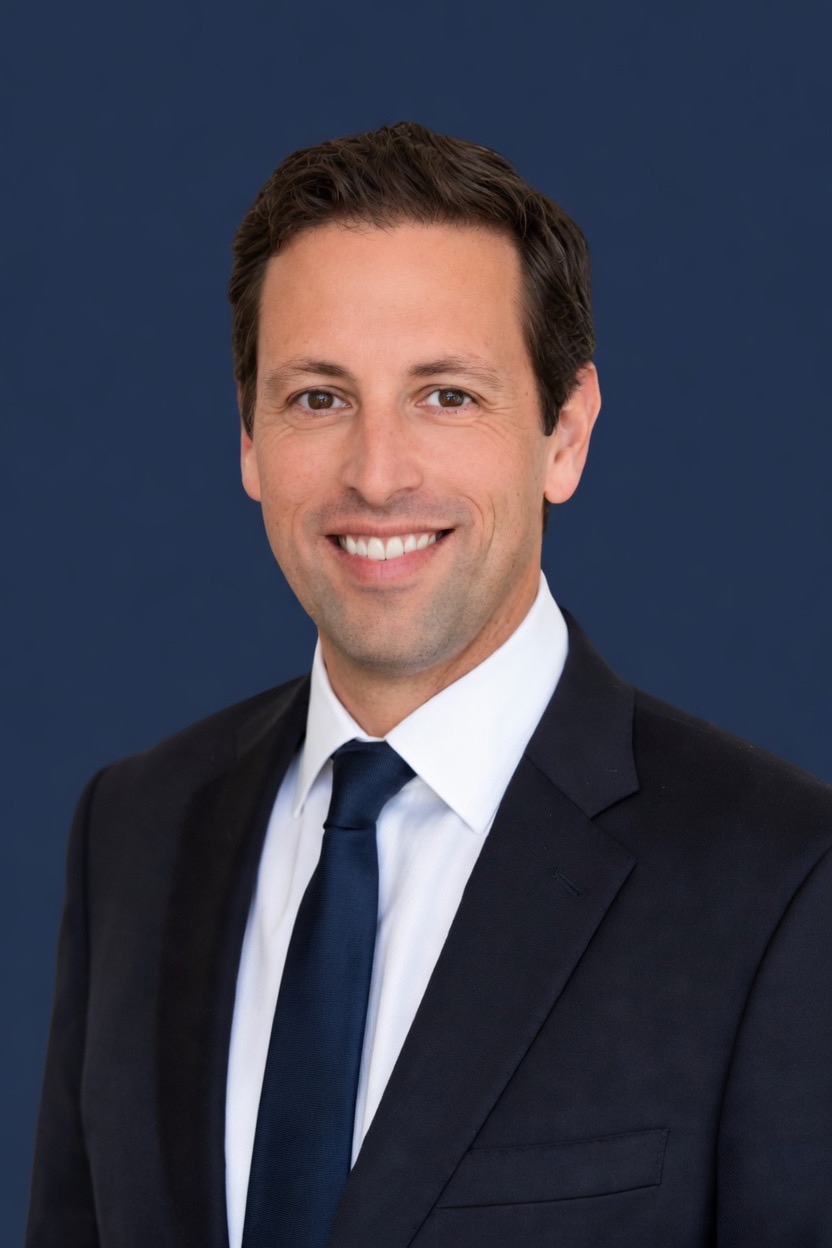
From tracking carrier AI vendor announcements across 50+ earnings calls and press releases over the past 18 months, one pattern stands out: the intermediary layer is thinning. When Anthropic’s Mike Ram and Allianz Group CTO Christian Freytag open Insurtech Insights USA 2026 on June 3 at the Javits Center, it will mark the first time a foundation model lab’s head of insurance shares a keynote stage with a carrier CTO at this scale. The following day, OpenAI’s Bastiaan de Goei joins Newfront’s Patrick Miller for a session on rewiring insurer data strategy with foundation model technology. Six thousand attendees, 400 speakers, six stages, and the two most consequential AI companies in insurance positioned not in a vendor booth but on the main stage.

This is not simply a conference booking decision. It reflects a deliberate commercial strategy by both labs to build carrier-facing sales organizations, hire insurance-specific talent, and negotiate directly with the CDOs and CIOs who control AI budgets. The implications extend well beyond the Javits Center. When foundation model vendors go direct, the economics of the entire AI delivery chain shift: consulting firms lose margin, system integrators compete with their own technology partners, and carriers gain negotiating leverage they did not have when the only path to frontier AI ran through a Big Four engagement letter.

This article examines the commercial architecture behind the lab-to-carrier shift, maps the specific partnership strategies of Anthropic and OpenAI, analyzes what life insurer participation at the same conference reveals about AI adoption beyond P&C, and quantifies the margin implications for consulting firms caught between their AI lab partners and their carrier clients.

The Conference as Commercial Signal

Insurtech Insights USA 2026 runs June 3 and 4, with programming heavily weighted toward AI. The opening keynote on June 3 pairs Anthropic’s Mike Ram, Head of Insurance, with Allianz’s Christian Freytag under the title “The AI-Defined Insurer: Rewriting the Rules of Risk, Data, and Competitive Advantage.” On June 4, OpenAI’s Bastiaan de Goei, Industry Marketing Leader, joins Patrick Miller, Head of Data & AI at Newfront (a WTW company), moderated by Viewpoint Ventures partner Ori Ben-Yishai.

The speaker list reveals how carrier buying centers have reorganized around AI. Neeren Chauhan holds the title Chief Innovation and AI Officer at Tokio Marine. Bob Bastian is Chief Data and AI Officer at Prudential Financial. Deepa Soni runs the combined Technology, Data, AI, and Ventures (TDAV) organization at New York Life. These titles did not exist three years ago at most carriers. An IBM IBV study cited by PwC found that 76% of organizations now have a Chief AI Officer, up from 26% one year earlier. Among those CAIOs, 61% control their organization’s AI budget and more than half report directly to the CEO or board.

For foundation model labs, these new roles represent a direct sales channel. A CAIO who controls the AI budget and reports to the CEO can sign a foundation model partnership without routing it through the CIO’s existing vendor management framework or the consulting firm’s project governance structure. The labs are staffing accordingly: Anthropic has a dedicated Head of Insurance, a Head of Americas, and is actively hiring Industry Principal and Strategic Account Executive roles specifically for the insurance vertical. These are carrier-facing sales and strategy positions, not partner channel managers.

Anthropic’s Carrier-First Partnership Architecture

Anthropic has built the most visible direct-to-carrier strategy in insurance AI. Five announcements in the first five months of 2026 establish a pattern: co-develop with the largest carriers, embed through data infrastructure partnerships, and use consulting firms as implementation accelerators rather than primary sales channels.

Allianz: Co-Development at Scale

The Allianz-Anthropic partnership announced January 9, 2026 is the clearest example of direct lab-to-carrier engagement. TechCrunch characterized it as “Anthropic’s first enterprise deal of 2026.” The partnership has three pillars: Claude models integrated into Allianz’s internal AI platform for all 156,000 employees, Claude Code deployed to thousands of developers globally, and an agentic AI layer for motor and health claims processing with human-in-the-loop for complex cases. An audit layer logs every interaction, decision, and data source, a direct response to the EU AI Act’s Annex III high-risk requirements that take effect August 2, 2026.

Allianz CEO Oliver Bäte described it as “a decisive step to address critical AI challenges in insurance.” Anthropic CEO Dario Amodei responded with language aimed squarely at regulated industries: “Insurance is an industry where the stakes of using AI are particularly high: the decisions can affect millions of people.” This is not the language of a technology vendor selling API credits. It is positioning as a co-development partner embedded in the carrier’s compliance architecture.

Travelers: 10,000 Engineers on Claude

In January 2026, Travelers announced deploying personalized Claude and Claude Code assistants to nearly 10,000 engineers, data scientists, analysts, and product owners. Beyond that, 30,000+ total employees have access to frontier models through TravAI, Travelers’ secure in-house agentic AI platform. EVP and CTO Mojgan Lefebvre reported “significantly elevated levels of engineering excellence and meaningful improvements in productivity.”

The Travelers deal illustrates a procurement pattern that consulting firms find difficult to replicate. Anthropic negotiated directly with the carrier’s technology leadership, and Travelers built TravAI internally rather than outsourcing integration to a systems implementer. Kate Jensen, Anthropic’s Head of Americas, acknowledged the distinction: “Most companies deploy AI as a tool, but Travelers is taking it a step further and weaving Claude into relevant workflows.” The implication is that Travelers is building, not buying, its AI integration layer, with Anthropic as the model provider and the carrier’s own engineers as the implementation team.

Verisk MCP Connectors: Embedding in the Data Layer

Verisk announced Model Context Protocol connectors for Claude on May 5, 2026, bringing ISO loss cost trends, experience insights, and filing signals directly into Claude through natural language queries. A second connector provides conversational access to Verisk XactRestore pricing and estimating intelligence for restoration contractors. Estimated time savings range from 30 minutes to two hours per estimate.

The MCP connector strategy is commercially significant because it makes Anthropic the default AI layer for carriers already buying Verisk data. Verisk’s customer base includes the top 100 US P&C insurers and global reinsurers and brokers. By building the connectors into Claude rather than offering a standalone AI product, Verisk is channeling its existing customer relationships through Anthropic’s platform. Verisk CEO Lee Shavel framed it in trust terms: “Trust is the foundation of insurance, and that doesn’t change as new technologies emerge.” For carriers that already trust Verisk data, the MCP connectors reduce the friction of adopting Claude to near zero.

The $1.5 Billion Financial Services JV

On May 4, 2026, Anthropic announced a $1.5 billion enterprise AI services joint venture with Blackstone, Hellman & Friedman (each contributing roughly $300 million), Goldman Sachs ($150 million), and additional investors including Apollo, General Atlantic, Leonard Green, GIC, and Sequoia. The following day, Anthropic released ten pre-built agent templates for financial services, including dedicated insurance claims and underwriting agents.

AIG CEO Peter Zaffino contributed a production metric at the launch: Claude “compressed timeline to review business 5x while improving data accuracy from 75% to over 90%.” JPMorgan CEO Jamie Dimon personally tested Claude Code and created what he described as “a huge dashboard” with financial analysis in 20 minutes. Anthropic projected tenfold revenue growth; actual results came in at 80x annualized growth in a single quarter, according to Amodei.

OpenAI’s Platform-and-Channel Strategy

OpenAI’s insurance approach differs from Anthropic’s in a structurally important way. Where Anthropic is building carrier-facing sales teams and co-developing with individual insurers, OpenAI is constructing a platform layer (Frontier) and using consulting firms as its primary enterprise delivery channel.

Dominant Market Share, Different Go-to-Market

An IA Capital survey published in May 2026 found OpenAI inside approximately nine out of every ten carrier AI stacks. Google Gemini was absent from carrier deployments entirely. That 90% penetration gives OpenAI an installed base advantage that shapes its commercial strategy: rather than selling carrier by carrier, OpenAI can layer enterprise capabilities on top of existing deployments.

The Frontier platform, launched in February 2026 with State Farm as a launch partner, is the vehicle. State Farm’s Joe Park, EVP and Chief Digital Information Officer, described the partnership as strengthening “the capabilities of State Farm agents and employees so they can provide best-in-class service” across 96+ million policies and accounts, 19,200+ agent offices, and 62,000+ employees. Frontier is described as a “semantic layer for the enterprise,” a unified platform for AI agents to navigate business software, execute workflows, and make decisions.

The Consulting Alliance Layer

In February 2026, OpenAI announced multi-year “Frontier Alliances” with Accenture, Boston Consulting Group, Capgemini, and McKinsey & Co. BCG and McKinsey serve as strategy and operating model partners; Accenture and Capgemini handle end-to-end systems integration. This is a deliberate channel strategy: OpenAI provides the models and platform, consulting firms provide the industry expertise, change management, and implementation labor.

The contrast with Anthropic is stark. Both labs work with consulting firms, but the relationship architecture differs. Anthropic’s PwC partnership trains 30,000 consultants on Claude, but Anthropic is simultaneously building direct carrier relationships (Allianz, Travelers, AIG) that operate independently of any consulting engagement. OpenAI’s Frontier Alliances position the consultancies as the primary enterprise delivery channel, with direct carrier deals (State Farm) as the exception rather than the norm.

This creates a measurably different cost structure for carriers. A carrier buying Anthropic directly negotiates model pricing with the lab, then builds or buys integration capability separately. A carrier buying OpenAI through an Accenture engagement pays for both the model access and the consulting firm’s implementation services, typically at blended rates that include the consultancy’s margin on top of the underlying model costs.

ChatGPT as Distribution Channel

OpenAI is also pursuing a strategy with no Anthropic parallel: using ChatGPT itself as an insurance distribution channel. In February 2026, OpenAI approved customer-facing insurance applications within the ChatGPT ecosystem, with over a dozen insurance apps awaiting approval in the pipeline. SciSoft’s Q1 2026 insurance AI trends report noted insurance sales moving to ChatGPT, and insurance broker stocks experienced a “sharp decline” following the announcement. This creates a channel conflict that Anthropic does not face: OpenAI is simultaneously a carrier technology vendor and a potential competitor to the carriers’ own distribution channels.

Comparing the Lab-to-Carrier Models

Dimension Anthropic OpenAI
Primary sales motion Direct to carrier CTO/CAIO Platform + consulting alliance channel
Insurance-specific org Head of Insurance, hiring vertical AEs Industry Marketing Leader role
Named carrier deals Allianz, Travelers, AIG, HUB International State Farm (Frontier launch partner)
Data layer integration Verisk MCP, Moody’s, S&P, Experian Frontier semantic layer (vendor-agnostic)
Consulting firm role Implementation accelerator (PwC, Deloitte, KPMG) Primary enterprise channel (Accenture, BCG, McKinsey)
Market share Growing from enterprise direct deals ~90% carrier stack penetration (IA Capital)
Distribution channel risk None (no consumer-facing channel) ChatGPT insurance apps compete with carrier distribution

Life Insurers Enter the AI Buying Center

The Insurtech Insights 2026 speaker list reveals something the P&C-dominated AI conversation often misses: life insurers and financial services companies are now active AI buyers, not observers.

Deepa Soni, EVP and CIO at New York Life, will present “From Enablement to Reinvention: New York Life’s AI Strategy to Empower, Elevate and Reimagine.” New York Life has given all 12,000 employees secure ChatGPT access and rolled out Microsoft Copilot across its internal Microsoft suite. Soni’s TDAV organization combines enterprise engineering, advanced data and AI, cybersecurity, and corporate venture capital under a single executive, the kind of organizational consolidation that gives a CIO both the budget authority and the technical oversight to negotiate directly with foundation model labs.

Laura Money, EVP and Chief Information and Technology Innovation Officer at Sun Life, will speak on “Making AI Work for IT: Scaling Innovation Without Compromising Security.” Bob Bastian, Chief Data and AI Officer at Prudential Financial, joins a main stage panel titled “Beyond the Hype: What Will Actually Define the Next Era of Insurance?”

The life insurance sector’s arrival in the foundation model buying center matters for two reasons. First, life and annuity products involve longer-duration liabilities, meaning AI deployment decisions made today will affect reserving and valuation for decades. The stakes of model selection are structurally higher than in short-tail P&C lines. Second, the life sector’s scale is massive: LIMRA reported $461.3 billion in annuity sales in 2024, and the life premium market exceeds $700 billion annually. Foundation model labs that establish partnerships with large life carriers gain access to data volumes and contract values that dwarf most P&C AI deals.

The Consulting Firm Squeeze

The direct lab-to-carrier model creates a margin compression problem for consulting firms that have positioned themselves as the primary delivery channel for enterprise AI.

The Historical Model

Before foundation model labs built insurance verticals, the typical carrier AI procurement path ran through a consulting engagement. A carrier would hire PwC, Deloitte, or Accenture to assess its AI readiness, design a deployment strategy, select vendors, build integrations, and manage change. The consulting firm captured margin at every step: strategy fees, implementation labor, ongoing managed services, and sometimes a markup on the underlying technology licenses.

This model worked when AI technology was generic and required substantial customization for insurance workflows. The consulting firm’s insurance domain expertise was the bridge between a general-purpose model and a carrier-specific application. The lab needed the consultancy to translate its technology into insurance use cases.

What Changes When Labs Go Direct

Three developments are compressing the consulting layer.

Pre-built insurance agents. Anthropic’s May 2026 release of ten production-ready agent templates for financial services, including dedicated insurance claims and underwriting agents, reduces the custom development work that consulting firms previously provided. A carrier can deploy an Anthropic claims evaluation agent that aligns with a human adjuster 88% of the time without commissioning a consulting firm to build one from scratch. Each pre-built template that reaches production quality is a project that does not require a consulting engagement.

Data layer connectors. Verisk’s MCP connectors for Claude let carriers query ISO loss cost trends and XactRestore pricing through natural language without custom integration work. Previously, connecting carrier AI systems to Verisk data required middleware development, often delivered by a systems integrator. The MCP standard replaces that custom work with a plug-and-play connector, removing another layer of consulting revenue.

Carrier-built orchestration platforms. Travelers built TravAI internally. AIG uses Palantir Foundry. Both chose to build the orchestration and governance layer in-house rather than outsource it to a consulting firm. The dual-vendor architecture emerging at the largest carriers requires internal orchestration capability that, once built, eliminates the need for consulting firm project management of AI vendor integrations.

The Counter-Narrative: Consulting Firms Adapt

The disintermediation story is not one-directional. Consulting firms are responding by becoming certified delivery partners for the labs themselves, creating a new revenue stream even as the old one compresses.

PwC’s expanded alliance with Anthropic, announced May 14, 2026, certifies 30,000 US professionals on Claude, with plans to extend training to PwC’s global workforce of 364,000+ across 136 countries. PwC established a joint Center of Excellence and launched a new business unit, Office of the CFO, as its first standalone unit anchored in Anthropic technology. The result PwC cites: “Insurance underwriting that took 10 weeks now takes 10 days.” A 70% delivery improvement reported by clients.

Accenture committed $3 billion over three years to double its AI talent to 80,000 professionals, with partnerships spanning both OpenAI (Frontier Alliance) and Anthropic. Deloitte is upskilling 100,000+ professionals in AI annually with its Trustworthy AI framework. These firms are making large-scale talent investments that position them as the implementation layer even when the sales relationship runs directly between lab and carrier.

The business model shift is from project-based AI strategy and development (high margin, one-time) to ongoing managed services and lab-certified implementation (lower margin per engagement, but recurring). Consulting firms that adapt to the new architecture will survive the margin compression; those that cling to the strategy-and-build model will find their pipeline shrinking as labs deliver more functionality out of the box.

The Broader Market Context

The lab-to-carrier shift is occurring within a broader acceleration in insurance AI adoption that provides the commercial rationale for both Anthropic and OpenAI investing in carrier-facing organizations.

An Evident report found an 87% year-over-year increase in AI deployments across the global insurance sector, with 68% of rollouts involving generative AI or agentic systems. Claims management accounted for 37% of all use cases (the largest share), followed by underwriting and pricing at 21%, and customer engagement at 21%. Half of all deployments came from P&C insurers.

Global insurtech funding reached $943.4 million in Q1 2026 across 42 deals, a 27% year-over-year increase. Gallagher Re reported that 95.2% of all insurtech funding was directed toward AI-focused companies. That concentration of capital confirms what the Insurtech Insights speaker list suggests: the insurance industry’s technology investment thesis has consolidated around foundation models and agentic AI.

Production results are validating the investment. Allianz’s Project Nemo achieved an 80% reduction in food spoilage claims processing time. Hiscox cut London Market specialty quote turnaround from three days to three minutes using Google Cloud Gemini, a 99.4% reduction. AIG’s multi-agent system delivered a 55% reduction in time to quote and approximately 40% increase in binding for Lexington middle-market property. Root, Inc. reported record profitability in Q1 2026 driven by what it describes as an AI-native pricing, underwriting, and claims architecture.

Why This Matters for Actuaries

The structural shift from consulting-intermediated to direct lab-to-carrier AI procurement creates four specific implications for actuarial work.

Vendor governance complexity increases. When a carrier’s AI technology came through a consulting firm engagement, the consulting firm bore partial responsibility for model selection, integration quality, and ongoing performance monitoring. In the direct model, that responsibility falls entirely on the carrier’s internal teams. For actuaries working under ASOP No. 56, the scope of model understanding required expands: you need to know not just what the model does, but how the lab’s update cadence, safety practices, and data handling protocols affect the model’s behavior in your specific workflows. The AM Best finding that only 18% of carriers track vendor risk despite 68% outsourcing AI development suggests most carriers are not yet prepared for this governance shift.

Expense ratio decomposition requires AI vendor granularity. As carriers negotiate directly with foundation model labs at different price points and consumption models, the AI component of operating expenses becomes more complex to decompose. Travelers runs both OpenAI and Anthropic. AIG runs Palantir plus Anthropic. Each vendor relationship carries different pricing structures (per-token, per-seat, enterprise license, consumption-based) that affect how AI expenses flow through the loss adjustment expense, underwriting expense, and general administrative expense categories. Actuaries building rate indications or benchmarking carrier efficiency need to understand these vendor-level economics to assess whether reported expense improvements are sustainable or reflect introductory pricing that will normalize.

The build-vs-buy decision now has a third option. The traditional carrier technology framework assumed a binary choice: build internally or buy from a vendor (often through a consulting firm). The direct lab-to-carrier model introduces a third path: co-develop with the lab. Allianz and Anthropic are co-developing compliance-native AI with an audit layer that logs every decision. Travelers built TravAI internally but uses Anthropic’s models as the cognitive engine. These are neither pure builds nor pure buys. For actuaries evaluating carrier technology strategies, especially in ORSA or ERM contexts, the co-development model introduces dependencies that do not fit cleanly into existing vendor risk frameworks. A lab co-development partner is more deeply embedded than a traditional vendor but less controllable than an internal build.

Model validation standards need to account for the lab update cycle. Foundation model labs update their models frequently. When a carrier relies on a consulting firm to manage the AI integration, model updates are typically staged and tested before deployment. In the direct model, labs may push updates on their own cadence, and the carrier’s actuarial and risk teams need processes to detect and evaluate changes in model behavior between versions. The emerging state regulatory framework for AI model validation in rate filings assumes the carrier understands and can explain every model it uses. Direct lab relationships make the carrier solely responsible for that understanding, with no consulting firm to share the burden.

The Insurtech Insights 2026 agenda is a snapshot of an industry in mid-transition. Foundation model labs are building the organizational capability to sell directly to carriers. Carriers are building the internal capability to buy directly from labs. Consulting firms are repositioning from primary sales channel to certified implementation partner. The actuaries who will be most valuable in this environment are those who understand not just the models, but the commercial relationships that determine how those models reach production, who governs them, and who bears the risk when they fail.

Sources

  1. Insurtech Insights, “Insurtech Insights USA 2026 Previews Top AI Programming One Week Out” (GlobeNewswire, May 28, 2026)
  2. Insurtech Insights, “Insurtech Insights USA 2026 Returns to New York as OpenAI and Anthropic Take Center Stage” (GlobeNewswire, May 20, 2026)
  3. Allianz, “Allianz and Anthropic Forge Global Partnership” (January 9, 2026)
  4. Travelers Investor Relations, “Travelers Partners with Anthropic to Expand AI-Enabled Engineering and Analytics Capabilities” (January 2026)
  5. Verisk, “Verisk Brings Its Trusted Analytics and Generative AI Capabilities Directly Into Anthropic’s Claude” (May 5, 2026)
  6. Fortune, “Anthropic Deepens Push Into Wall Street With New AI Agents and $1.5B JV” (May 5, 2026)
  7. Anthropic, “Claude for Financial Services” (May 2026)
  8. IA Capital Group, “OpenAI Dominates AI Stacks as Insurance Industry Moves From Pilot to Production” (The Insurer, May 6, 2026)
  9. State Farm, “State Farm Advances AI Vision Through Collaboration with OpenAI” (February 5, 2026)
  10. Fortune, “OpenAI Partners with McKinsey, BCG, Accenture and Capgemini to Push Its Frontier AI Agent Platform” (February 23, 2026)
  11. PwC, “Anthropic and PwC Expand Alliance Driving Impact Across Client Work and the Firm” (May 14, 2026)
  12. Reinsurance News, “Insurance AI Deployments Jump 87% as GenAI and Agentic Systems Expand: Evident” (2026)
  13. SciSoft, “Q1 2026 Insurance AI Trends Report” (2026)
  14. PwC, “What’s Important to the Chief AI Officer in 2026” (2026)
  15. Carrier Management, “Travelers Partners with Anthropic to Expand AI Capabilities” (January 2026)

Further Reading on actuary.info

Stay ahead with daily actuarial intelligence - news, analysis, and career insights delivered free.

Subscribe to Actuary Brew Browse All Insights